Statements
An ad film made on a generative pipeline. One clear story wins.
The film makes one argument: when everyone has a version, the one clear story wins. Three characters, one location and a story, told in forty-seven seconds with no wasted frames.
AI video is full of demos and short on productions. The models give you shots, not films: characters drift between takes, cameras wander, and every generation is a pull on a slot machine. A demo can hide that. A 47 second ad film with three characters, one location and a story cannot.
I have delivered more than 30 films the traditional way. The experiment was never whether AI can generate video. It was whether a director can run AI like a crew.
The pipeline runs like any production: look development, keyframes, video takes, voice, then the finish, with a gate between every phase. A problem caught in a still costs one image. The same problem found in video costs a day of takes.
The cast and the set live as locked reference elements, and the location plate is the single source of truth every shot answers to. Continuity stops being luck. And every failure becomes a law: when a generation fails, the reason gets written down as a rule the next prompt must obey. One film's production wrote about 35 of them, and the next film starts with all 35 for free.
One director, start to finish. 94 stills and 89 video takes generated, 30 approved, 15 shots locked, with a 20 second cutdown and a 6 second bumper designed on day one, not improvised at the end.
Takes were judged with instruments, not vibes. Small scripts written during production measured whether the camera actually held still and whether a character region actually moved, and pulled frame-exact stills so one shot's end frame becomes the next shot's start frame. Review happened on contact sheets, the way it should.
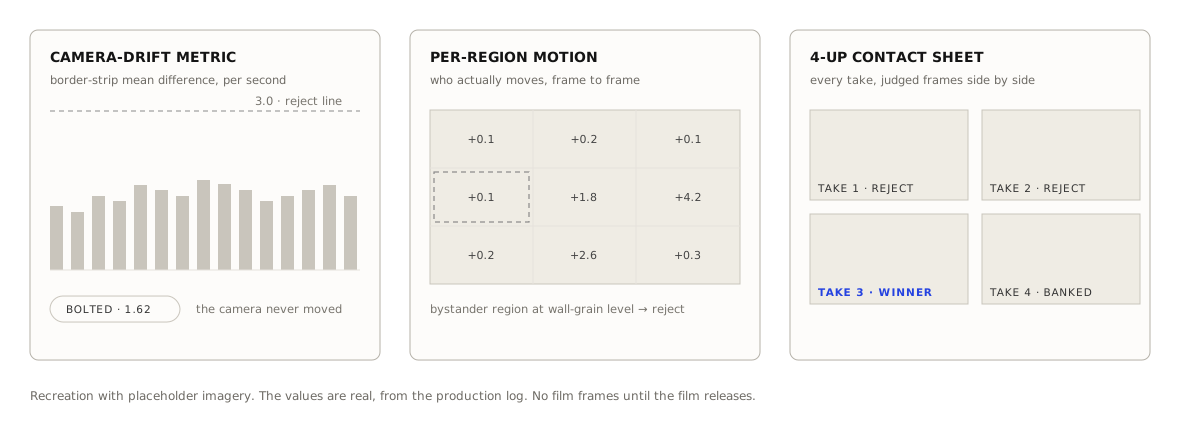
Generation has limits, and part of the run was learning exactly where they sit. One of the written laws draws the line: what belongs to generation and what belongs to post. The takes then went through a real finish, the same as any film I have delivered: the edit, the grade, sound design and the mix, and the cleanup passes that hide the seams generation leaves behind.
The film had to work silent before the voice went on. Generation made the takes; the finish made them a film.
Every take passed or failed on my verdict. The rejection log reads like any edit suite: her performance is off, his stillness looks wrong, the beat fired too early.
The clearest moment came late. For one shot, six rounds of increasingly precise prompts could not stage the frame the way I saw it. So I stopped describing, built the start frame myself, and the model animated my frame. The winning take of the film's longest shot began as my own image. The tools changed. Direction did not.
The pipeline outlived the film. The second film's production bible was written on it in a day, inheriting every law the first one paid for. That is the test of a system: the second run costs less than the first. For an agency or a brand team, this is a new production tier: real ad films, prototyped and shipped by one director.