The capacity model
A month of calendar work, finished in three days. Planned, not rushed.
Agency calendars slip everywhere, and for a reason: work arrives from every direction, and nobody plans against what a working day actually holds. The cost is quiet: rushed posts, pushed calendars, and good designers doing their best work at midnight. Running Ampersand's creative output, I decided to treat it as what it is: a planning problem wearing a creative costume.
Every job enters through one intake, with an owner and a date, and the plan is built on real capacity. A designer's day holds three new posts plus changes. A motion designer's holds two social videos. Once the day is honest, the calendar is honest.
It ran on a spreadsheet. The system was the thinking, not the software.
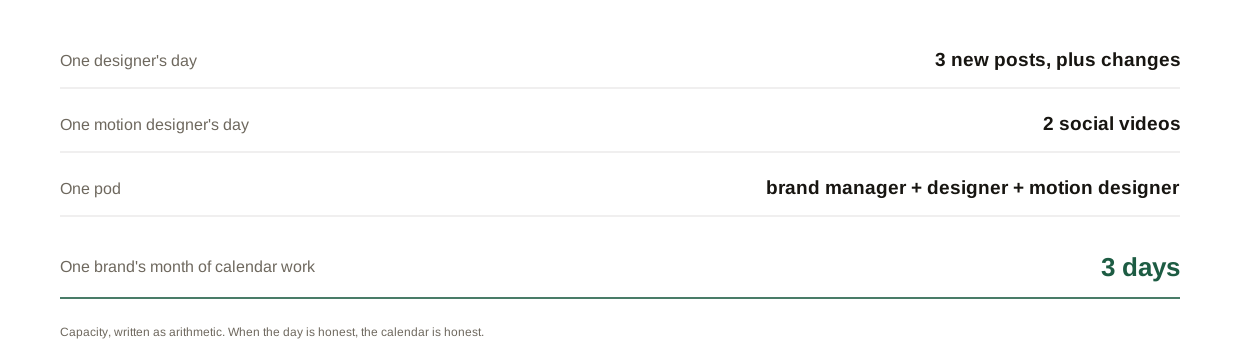
The team ran in pods: a brand manager, a designer and a motion designer who owned their brands end to end, so around eight brands shipped in parallel instead of queuing behind each other. The result: a brand's full month of calendar work finished in three days, and calendars locked months in advance.
The model outlived the moment it was built for. The same thinking runs my estimation and capacity work at S51 today.